
Clematis Street is the historical "Main Street" of West Palm Beach, stretching for several blocks from Flagler Drive on the Intracoastal Waterway westward into the downtown area. It is characterized by its blend of historic architecture, eclectic local businesses, and a thriving nightlife scene.
Historical Significance: Clematis Street was the city's main commercial artery from the mid-1890s. The 500 block is a U.S. Historic Commercial District, featuring structures built in the 1910s and 1920s, showcasing Mediterranean Revival and masonry vernacular architectural styles.
Waterfront Access (East End): The street terminates at the scenic Waterfront Commons on the Intracoastal Waterway. This area features:
Centennial Park: A great public space with colorful, interactive water fountains for children.
The Great Lawn: A venue for major festivals and events with picturesque views of Lake Worth Lagoon and Palm Beach across the water.
Dining and Nightlife: Clematis Street is famous for its concentration of restaurants, bars, and nightclubs, giving it a high-energy, eclectic vibe, particularly after dark. Cuisines range from authentic Italian and Mexican to American gastropubs and unique local spots.
Shopping: The retail mix tends to favor local boutiques, antique shops, novelty stores, and unique small businesses over large national chains.
Signature Events:
Clematis by Night: A highly popular, free weekly concert series held on Thursday evenings at the Waterfront, featuring live music.
GreenMarket: An award-winning farmers' market held seasonally on Saturday mornings by the waterfront.
4th on Flagler: The city's massive Independence Day fireworks celebration.
Located a few blocks south and west of the main Clematis corridor, The Square is a large, upscale, mixed-use complex that spearheaded the urban renaissance of West Palm Beach in the early 2000s.
Urban Design: Originally opened as CityPlace in 2000, it was later rebranded as Rosemary Square and is now simply The Square. It is a premier example of New Urbanist development, designed as a city-within-a-city.
Architecture: The design is distinctly European-inspired, featuring Mediterranean and Venetian architectural elements, creating an elegant, polished, and open-air atmosphere with central plazas and beautifully paved pedestrian streets.
Retail and Lifestyle: The focus is on a high-end, contemporary lifestyle. It hosts a mix of luxury and national retail tenants, home furnishings, and upscale dining. Major anchors often include a cinema, a fitness center, and a grocery store (Publix).
Mixed-Use Development: Beyond shopping and dining, The Square incorporates residential units (apartments and condos) and modern office towers, fostering a truly vibrant 24/7 community.
Cultural Centerpiece: The complex incorporates the beautifully restored Harriet Himmel Theater (a former 1926 church), which now serves as a cultural and event venue.
Community Space: The central plaza and outdoor seating areas are designed for gathering, with programmed events, pop-up markets, and art installations (like the famous Wishing Tree or seasonal holiday displays).
The relationship between Clematis Street and The Square is symbiotic, with a free trolley service often connecting the two areas, making it easy for visitors to experience the full range of downtown offerings.
World-Class Acoustics and Architectural Grandeur
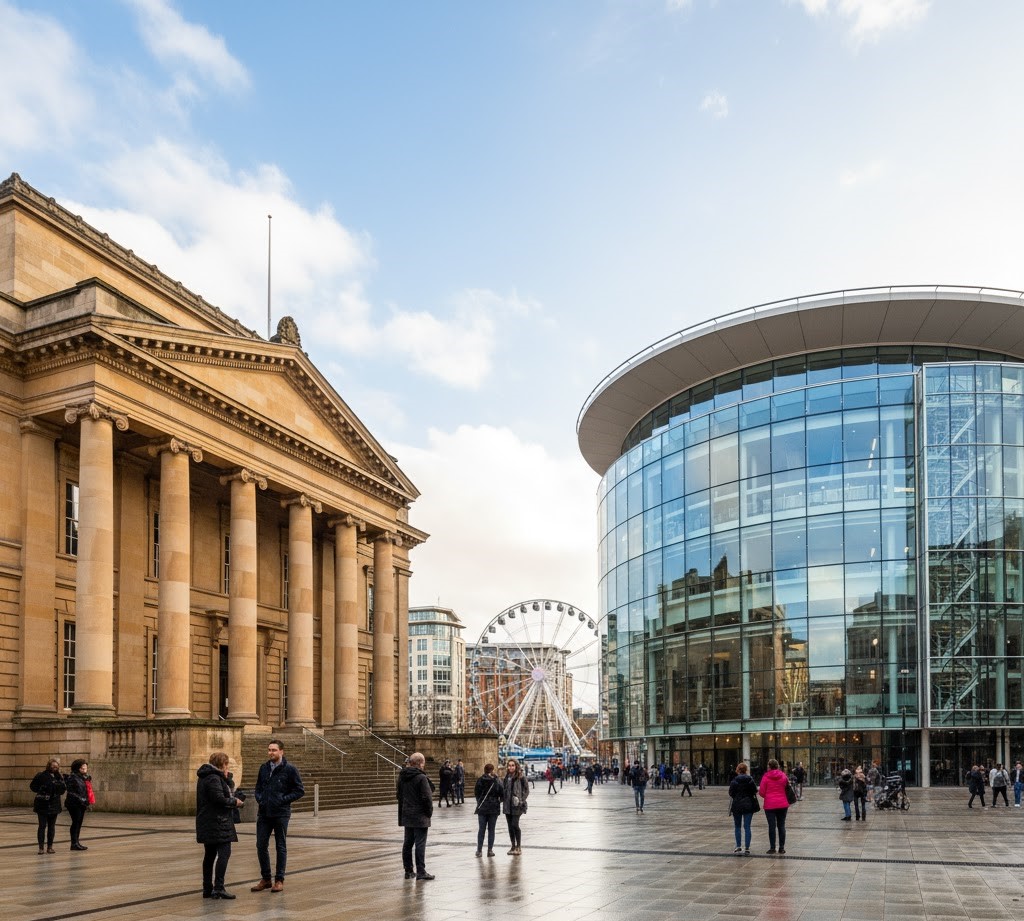
Birmingham is a major cultural centre, and its musical heart beats strongest in Centenary Square. The pairing of the historic Town Hall and the modern Symphony Hall offers a stunning showcase of the city's commitment to the arts.
|
||